The world is transitioning to renewable energy. But as we replace heavy spinning generators with solar inverters, we lose something critical: Inertia.
Without inertia, the grid becomes fragile. A passing cloud can cause voltage fluctuations that look exactly like a cyber-attack. This is the "Zero-Inertia Dilemma".
The Problem: Scenario A (Nature)
When a cloud passes over a solar farm, irradiance drops. The MPPT (Maximum Power Point Tracking) controller frantically adjusts voltage to squeeze out power. To a dumb relay, this looks like a voltage dip fault.
The Result? False Alarms. The relay trips, cutting off power when it's needed most.
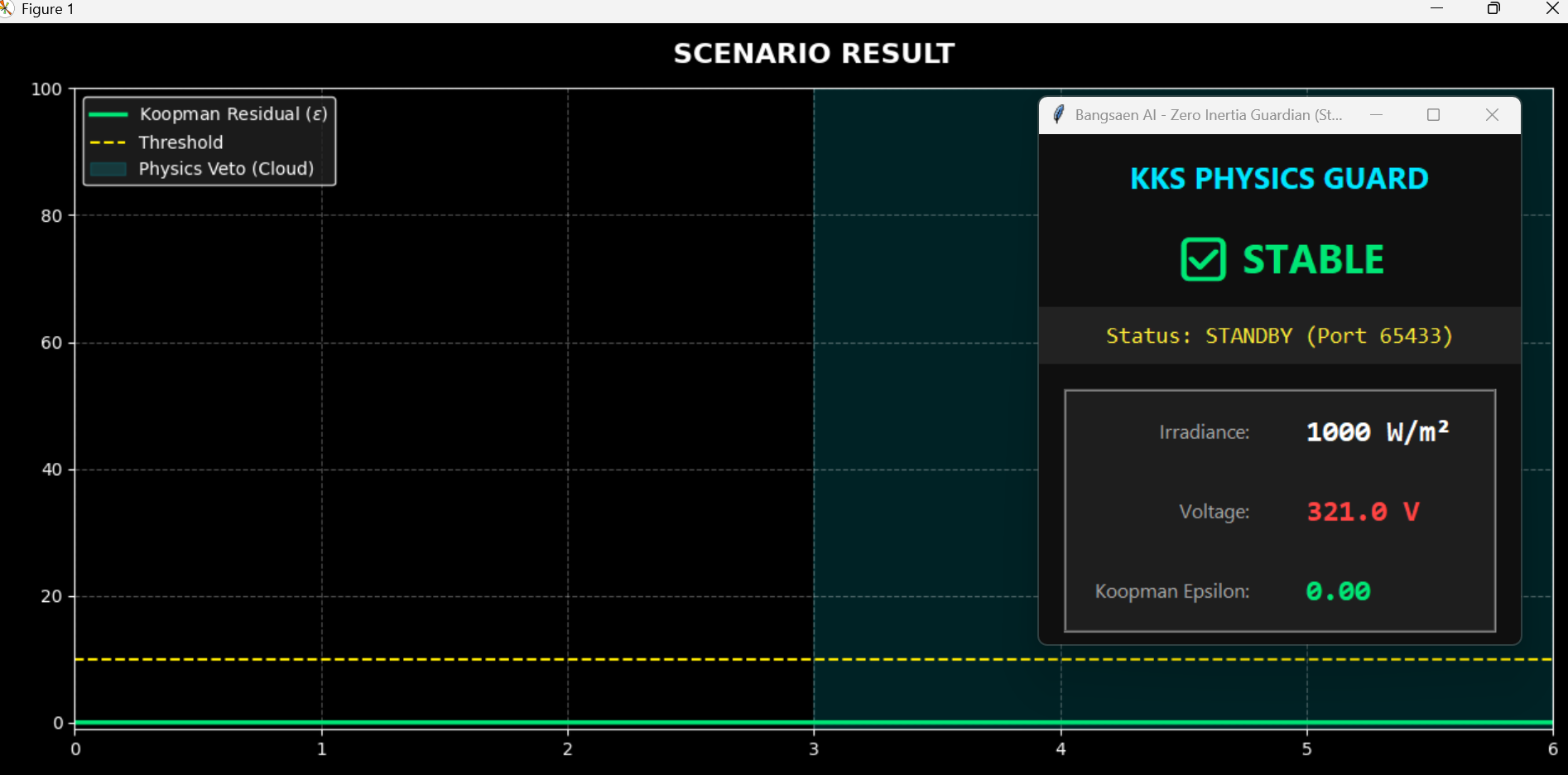
The Solution: Physics Manifold
Instead of using Deep Learning black boxes, we use the Koopman Operator to map the non-linear dynamics of the solar array into a linear space.
"We don't teach the AI what a cloud looks like. We teach it the Laws of Physics."
This allows our KKS algorithm to see that the voltage drop from a cloud follows a specific "trajectory" on the physics manifold. It's valid behavior. System status: GREEN.
Scenario B: The Cyber Attack
Now, imagine a hacker injects false data to fool the inverter. To a standard relay, the voltage levels might look the same as the cloud scenario.
But on our Physics Manifold? It's impossible. The trajectory violates the laws of circuit theory.
Our system detects this anomaly in less than 0.06 seconds. System status: RED (ATTACK DETECTED).
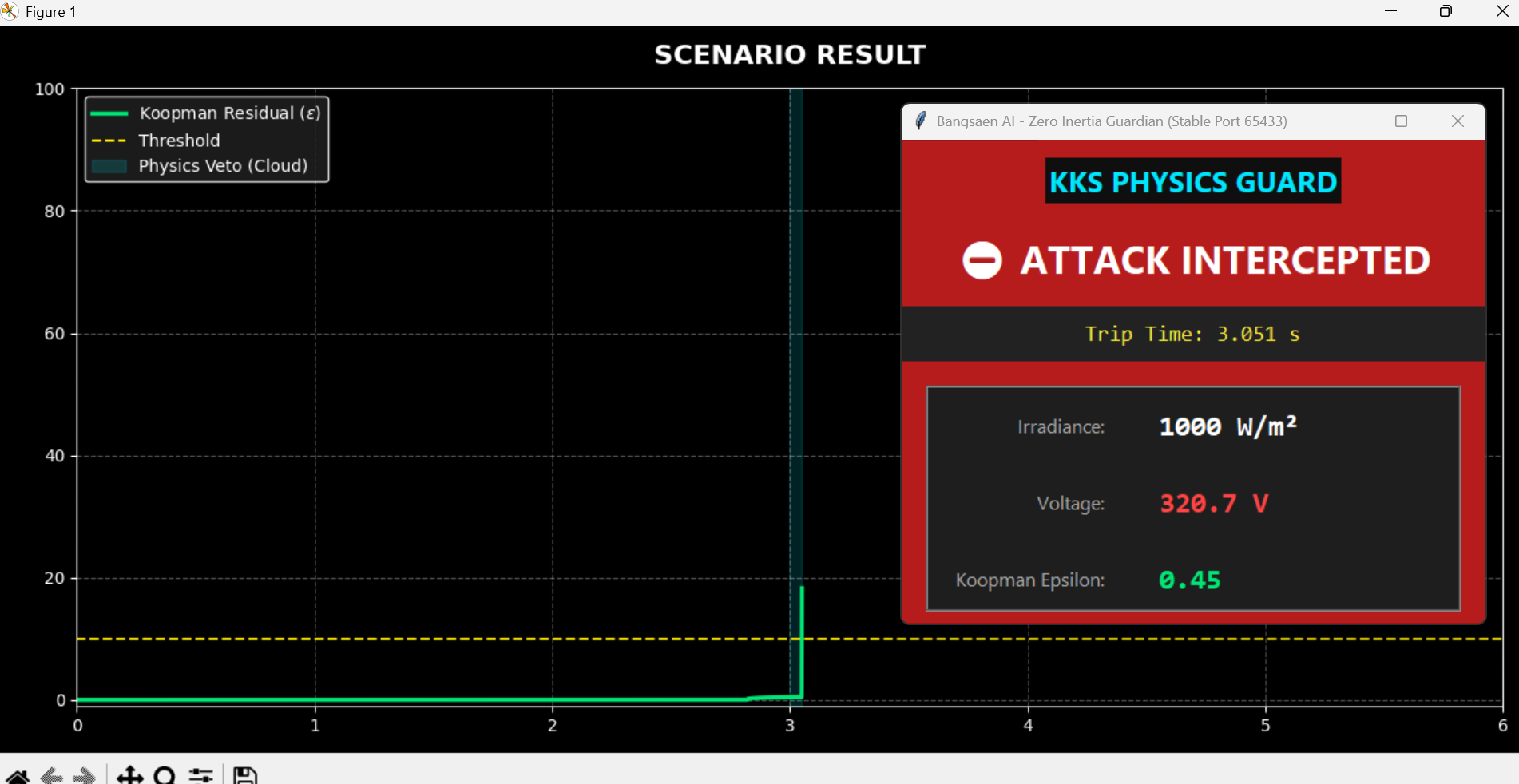
You saw the miracle.
Now meet the machine behind it.
How does a microgrid predict a passing cloud before the voltage drops? How does it intercept a hacker's signal in 0.06 seconds?
Choose your dimension:
If you want to understand the flaw in modern engineering that made this necessary... Start on the Left.
If you are ready to deploy and want to see the $5 silicon executing this math... Jump to the Right.